

Three years ago, running a phone on an airsoft chest rig was something only the most gear-obsessed milsim players worried about. Today it's practically standard — and for good reason.
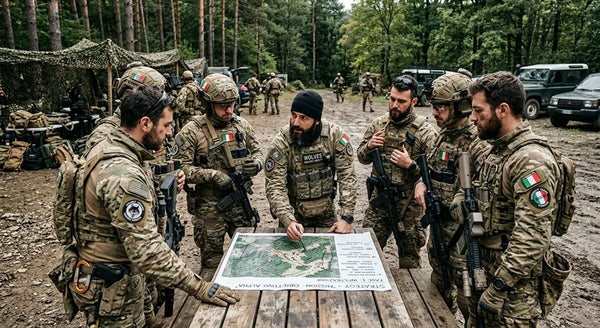
Navigation apps, radio apps, event management platforms, team comms, mission briefs accessible on the fly: smartphones have become a genuine tactical tool in serious airsoft and milsim play. The problem is that most players still carry them in a cargo pocket, a random pouch, or taped to a forearm with questionable results.
There's a better way to carry a phone in the field — and once you run one, you won't go back.
Why Phone Carry Matters More Than You Think
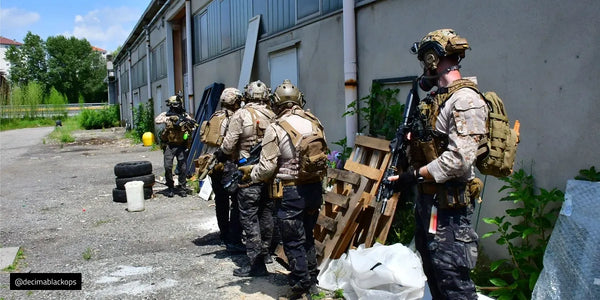
Let's start with the basic tactical argument. During an active milsim operation, reaching into a cargo pocket for your phone requires you to break your ready position, take your eyes off your sector, and use both hands. That takes three to five seconds minimum. In a CQB environment or during active contact, that's an eternity.
A chest-mounted phone means: look down, glance at the screen, return eyes to sector. Under two seconds, hands stay on the weapon. For navigating a grid reference, checking a mission objective, or confirming a frequency — the difference in speed and safety is significant.
Beyond pure speed, there's situational awareness. Players who have to dig for their phone tend to use it less. They miss updates, skip map checks, or rely on verbal relay from a teammate who has their phone out. A mounted phone is consulted casually and frequently. One that requires excavation gets used only when there's no other option.
What to Look for in an Airsoft Phone Mount
Not every phone mount on the market is built for actual field use. Here's what separates purpose-built tactical mounts from adapted civilian solutions:
MOLLE Compatibility
The mount should attach natively to a standard 3x4 MOLLE grid without adapters, tape, or zip ties. Hook-and-loop attachments that work in an office collapse during crawling, prone work, or any dynamic movement. Solid MOLLE tab integration means the mount stays exactly where you put it.
Secure Hold Under Movement
A mount that vibrates loose after twenty minutes of running degrades fast. The phone needs to be held in a way that survives drops, prone work, crawling through obstacles, and the general abuse of a full-day event. Look for dual retention — typically elastic or rubber band secondary securing over the mechanical attachment.
Hands-Free Access and Magnetic Release
The friction between "using the phone" and "keeping it mounted" determines how often you actually check it. A mount that requires two hands and careful repositioning to remove the phone will be used half as often as one that releases with a single magnetic pull and remounts with a click.
The magnetic mounting system is the feature that separates serious field designs from afterthought solutions. One-handed removal, one-handed remounting — it should work while wearing gloves, while moving, under low light.
Adjustable Viewing Angle
Your chest rig sits at a different angle when you're standing, crouching, and prone. A fixed-angle mount requires you to shift the whole kit to read the screen. An adjustable friction hinge lets you set the angle once and have it work across positions, or adjust it in three seconds between phases.
Size and Profile
You don't want a phone mount that extends four inches off your chest and catches on every doorframe. A low-profile design — one that fits within the plane of your chest rig or extends minimally — keeps the mount from becoming an obstacle in tight CQB.
Introducing the Brey Tac Nav-Board
The Nav-Board is a chest-mounted smartphone EUD (End User Device) carrier built around the requirements above.
The frame uses 3mm Kydex panels — the same material used in professional holster manufacturing — for a combination of rigidity and impact resistance that polymer alternatives don't match. It attaches to any standard 3x4 MOLLE grid through tab hooks that stay put under aggressive movement.
The exclusive magnetic mounting system is the design centerpiece. The phone cover gets a small metal ring (included with the kit, with a millimeter template to center it precisely). That ring snaps to the magnetic mount on the Nav-Board with an audible click. Remove the phone with one hand, remount with one hand. Works with gloves. Works in the dark once you've practiced it twice.
Two elastic rubber bands provide secondary retention for situations where the magnetic hold alone isn't enough — crawls, vehicle ingress, anything with sustained vibration.
The front panel is adjustable to five different height positions to prevent interference with chest rig accessories — pouches, admin panels, comms gear. The friction hinge holds the panel at any angle you choose, with enough resistance that the weight of the phone doesn't cause drift.
Front panel dimensions: 165mm wide × 80mm tall — fits all standard smartphone models.
The front panel face is covered in loop velcro, with 10 anchoring points (8 open, 2 closed) around the perimeter for elastic bands and cable ties. If you want to attach a light, a signal mirror, or a small card holder, the real estate is there.
How It Fits Into a Milsim Kit
The Nav-Board is designed for chest rig mounting — plate carrier front panel, chest rig accessory row, or standalone chest panel with shoulder strap. The 3x4 MOLLE attachment means it goes anywhere a standard MOLLE pouch goes.
Common mounting positions:
Center chest, upper panel. Highest visibility, fastest glance. Best for players who check their phone frequently and prioritize speed over weapon manipulation clearance.
Center chest, lower panel. Slightly out of the direct eyeline, but clears space for optics and weapon-mounted accessories. Preferred by players with taller setups.
Side chest, non-dominant side. Keeps the dominant hand side clear. Requires a slight turn to view, but many players prefer the clearance tradeoff.
The Nav-Board is not a holster replacement and not designed for thigh mounting — it's a chest tool, and the ergonomics are optimized for that position.
The Wider Context: Building a Functional Milsim Kit
The best milsim kits share a design philosophy: every tool is accessible in under two seconds, without breaking ready position, without requiring both hands.
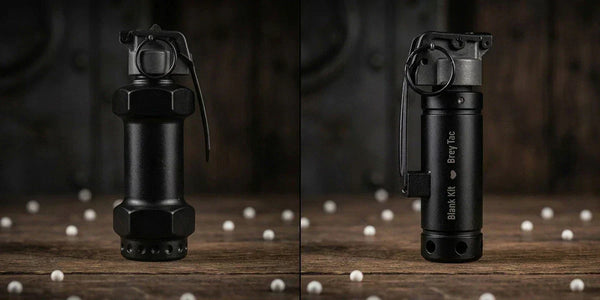
Grenades go in dedicated holders, not cargo pockets. Magazines stage in a consistent order. Radio PTT mounts on the shoulder strap. And the phone goes on the chest rig, on a mount that makes it a tool instead of a liability.
The Nav-Board solves one specific problem — phone carry — completely. If you're running a serious milsim kit and currently digging through a pocket to check your GPS grid, it's probably the fastest upgrade to your operational efficiency available right now.
Nav-Board is available now.
$52.00 — Ships to the United States →
Running a CQB kit? Pair the Nav-Board with the Blank Kit V2 for a complete tactical setup built around field-tested reliability.
0 comments